The European Union (EU) is just that: a union between the European countries. The EU stretches across Europe, from Finland to Cyprus. Shortly after World War II, France and Germany thought up a plan that would ensure an alliance between the European countries. The Netherlands, Belgium, Luxembourg, Italy, and little Malta also signed off on this plan. What started as six united countries, soon grew into an even stronger alliance amongst twenty-eight European nations. Although the EU was founded in 1957, Great Britain had not entered the EU until 1973, along with Ireland and Denmark.
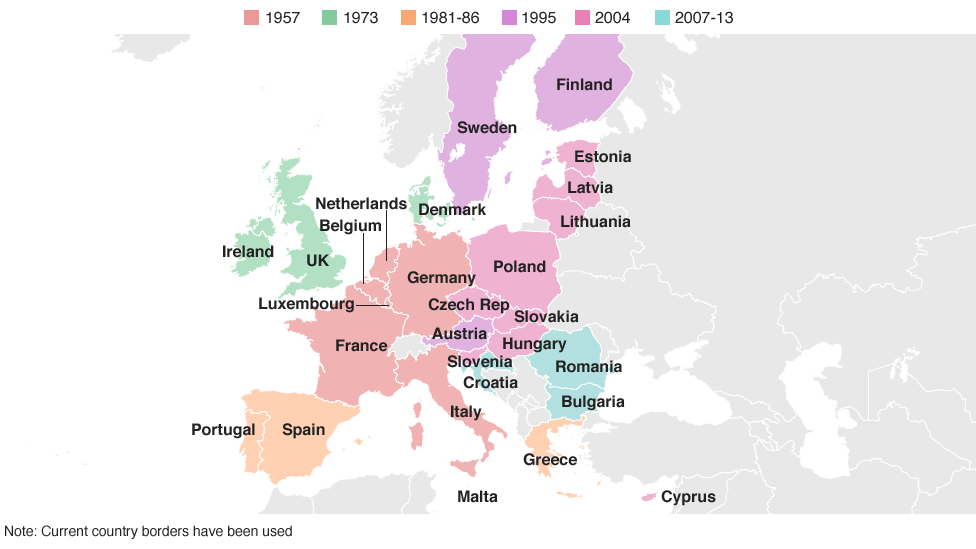
Map Origin: http://www.bbc.co.uk/guides/zgjwtyc
The modern EU is managed by three bodies. The EU Council, being the first body, includes the Head of States from each of the 28 European nations. This body also includes the European Council President (currently Donald Tusk) and the President of the European Commision (Jean-Claude Juncker). The EU Council proposes new laws and sets the policies. The second body is the European Parliament. Their main role is to pass laws, decide on international agreements, act as a supervisory, and establish and approve the EU budget. The third body is the European Commission. Their purpose is to ensure all members of the EU remain consistent in terms of regional, agricultural, and social policies. These three bodies work to create unity by not only helping their own countries, but their fellow countries around them. To ensure peace is to ensure stability and unity amongst the European nations.
Being a member of the EU grants any citizen the freedom to work, live, and travel to other EU countries. For example, if an English citizen would want to retire in Italy, they are still entitled to their English pension and insurance. The EU creates a stronger security in the countries, thanks to its connecting and coordinated justice system. The ability to share criminal records across 28 countries creates a stronger security amongst the EU. Larger trading blocs create better import and export trading opportunities, and better prices on trade goods. Studies have shown that up to 10% of Great Britain’s employment opportunities are linked the European Union. Nineteen out of twenty-eight countries share the same currency: otherwise known as the Euro (approximately $1.12). The benefits of being a member of the EU are endless. However, for some countries, the benefits are still not enough reason to stay a member of the EU.
While some of Britain would wish to remain apart of the EU, the country has voted to leave.
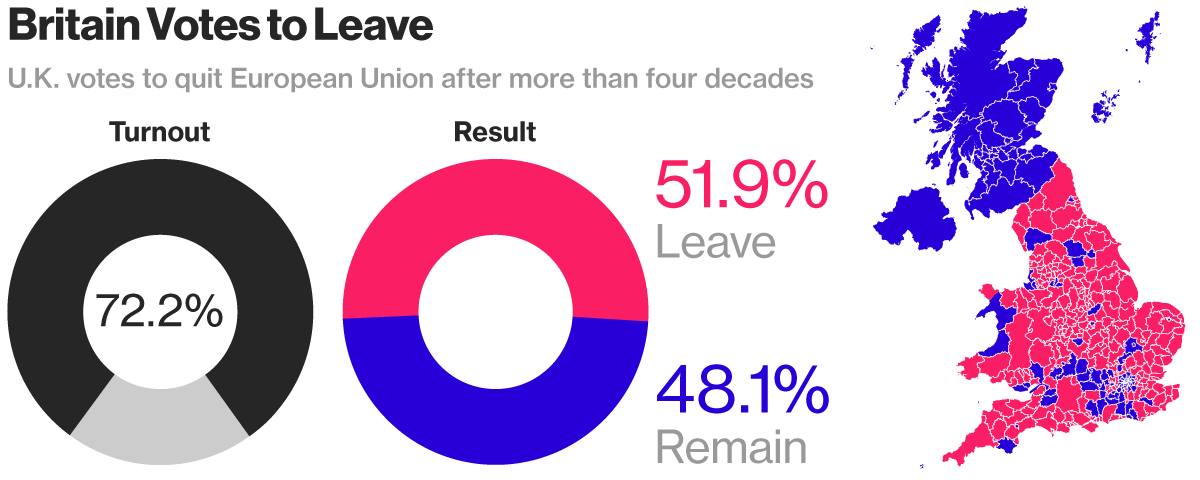
Image: Bloomberg
The referendum’s results began the long and grueling process of removing the United Kingdom from the EU. While Britain acknowledges the advantages of remaining a member of the EU, it is believed that the EU is holding the United Kingdom back. Although they are one of the highest money contributors to the EU, Britain receives little in return. Great Britain’s wishes to retain its freedom, while reaping the benefits of the EU. Three years after the vote Britain still struggles with leaving the EU. Britain may have voted to leave, but it is a wonder what steps the country will take to do so.

 Brexit: Britain's Exit